Example Sentences of Present Simple Tense in English ilmist
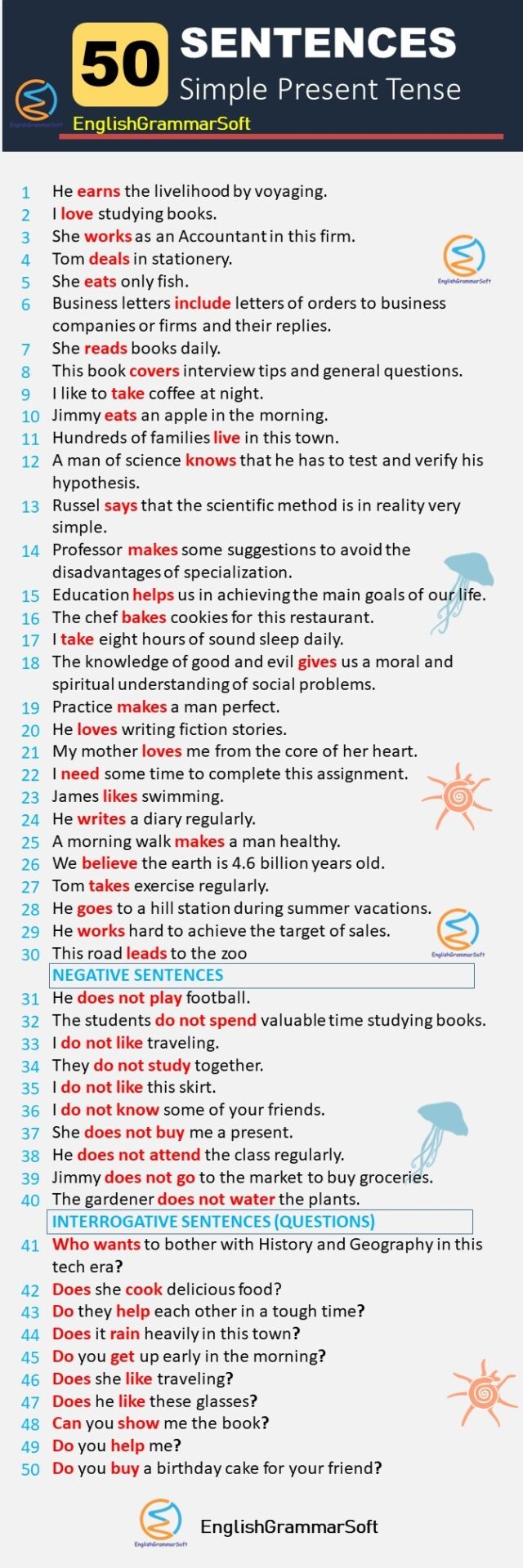
Simple Present Tense Sentences (50 Examples) EnglishGrammarSoft
Hi SurajBeka, Actually, no, it isn't! Technically speaking, a "tense" is a verb form which shows the time of the action, e.g. play - present, played - past. The important thing is that it is a verb form - that is, the base verb is modified e.g. by adding "ed" to make the past tense.. However, to talk about the future, we do not change the base verb, but instead add another verb: will play.
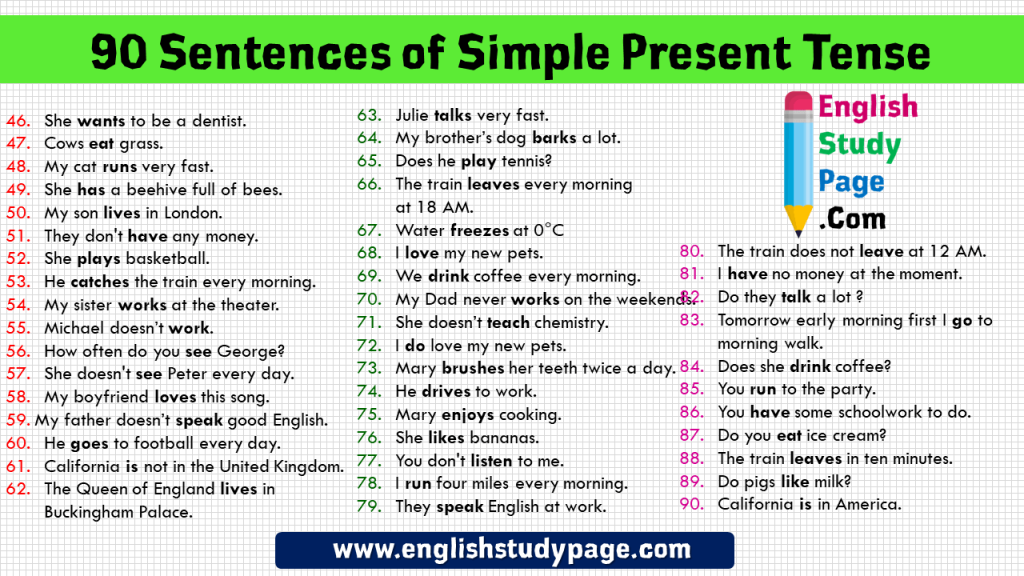
90 Sentences of Simple Present Tense, Example Sentences English Study Page
The simple present tense is an English verb tense used to describe facts and habits, to describe scheduled events in the future, and to tell stories. Here are two easy examples of each usage: (1) Simple present tense to describe facts and habits. Alan walks the dog every morning. He plays chess. (2) Simple present tense to describe scheduled.
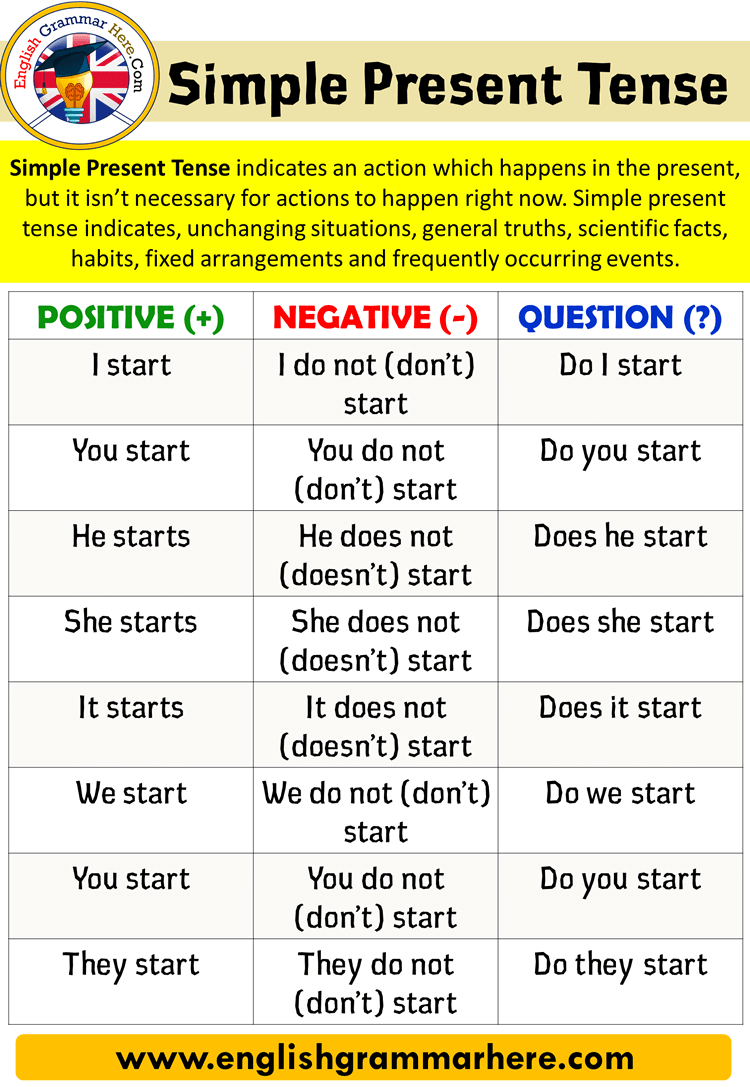
Present Simple Tense, Using and Examples English Grammar Here
Simple Present Tense Examples: Negative. These are some examples of negative sentences using the Simple Present. I don't know English. I don't have any money. I don't go to church. She doesn't like to run. She doesn't pray. She doesn't work. He doesn't have a beard.
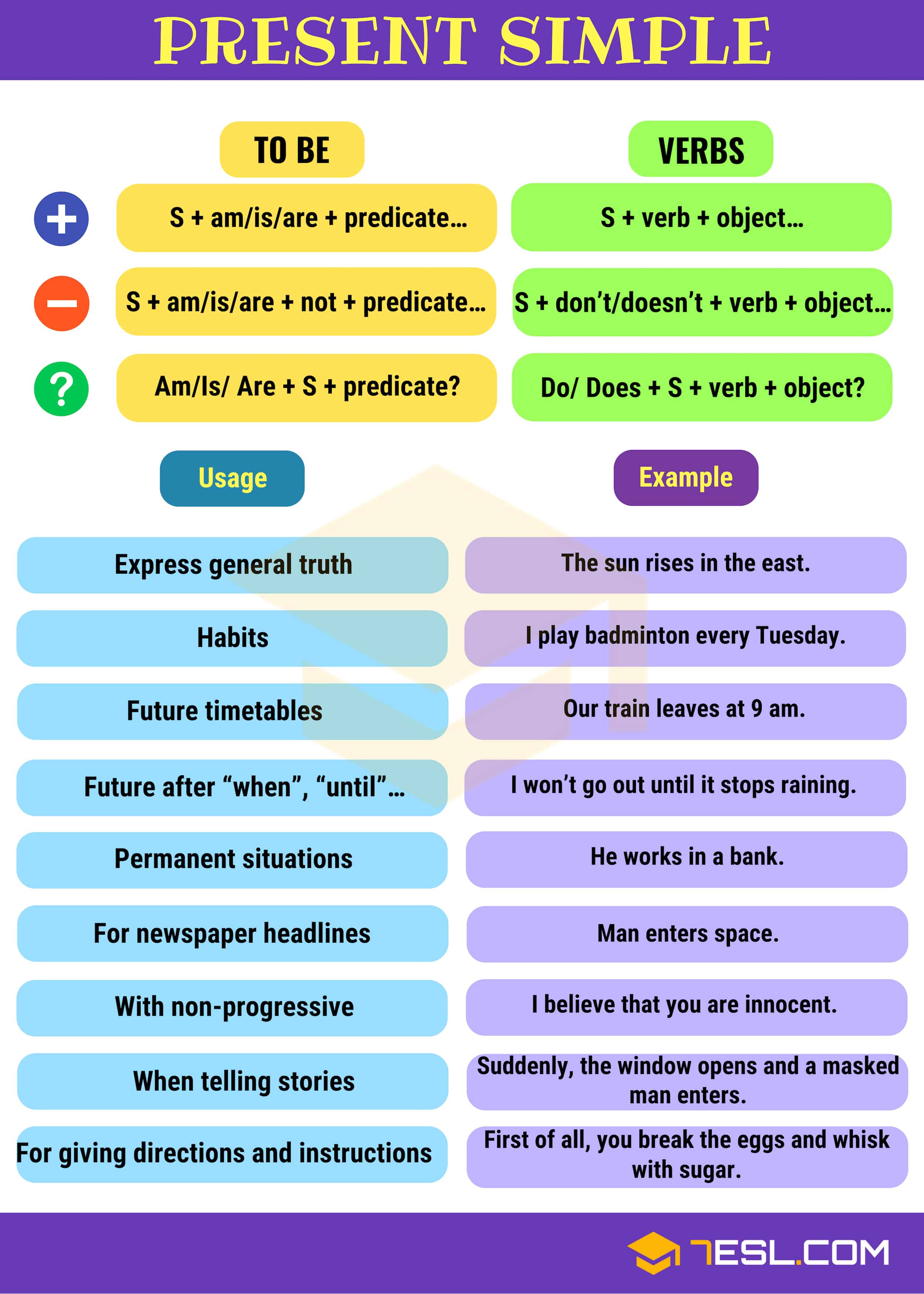
Present Simple Tense (Simple Present) Definition, Rules and Useful Examples • 7ESL
Step 1: Identify the auxiliary verb "do". The auxiliary verb "do" is used to form questions, negatives, and emphasis in the simple present tense. It is important to identify this verb in a sentence to make the negative correctly. Example: John plays tennis every day. Step 2: Add "do not" or "does not". To make the simple present negative, we.
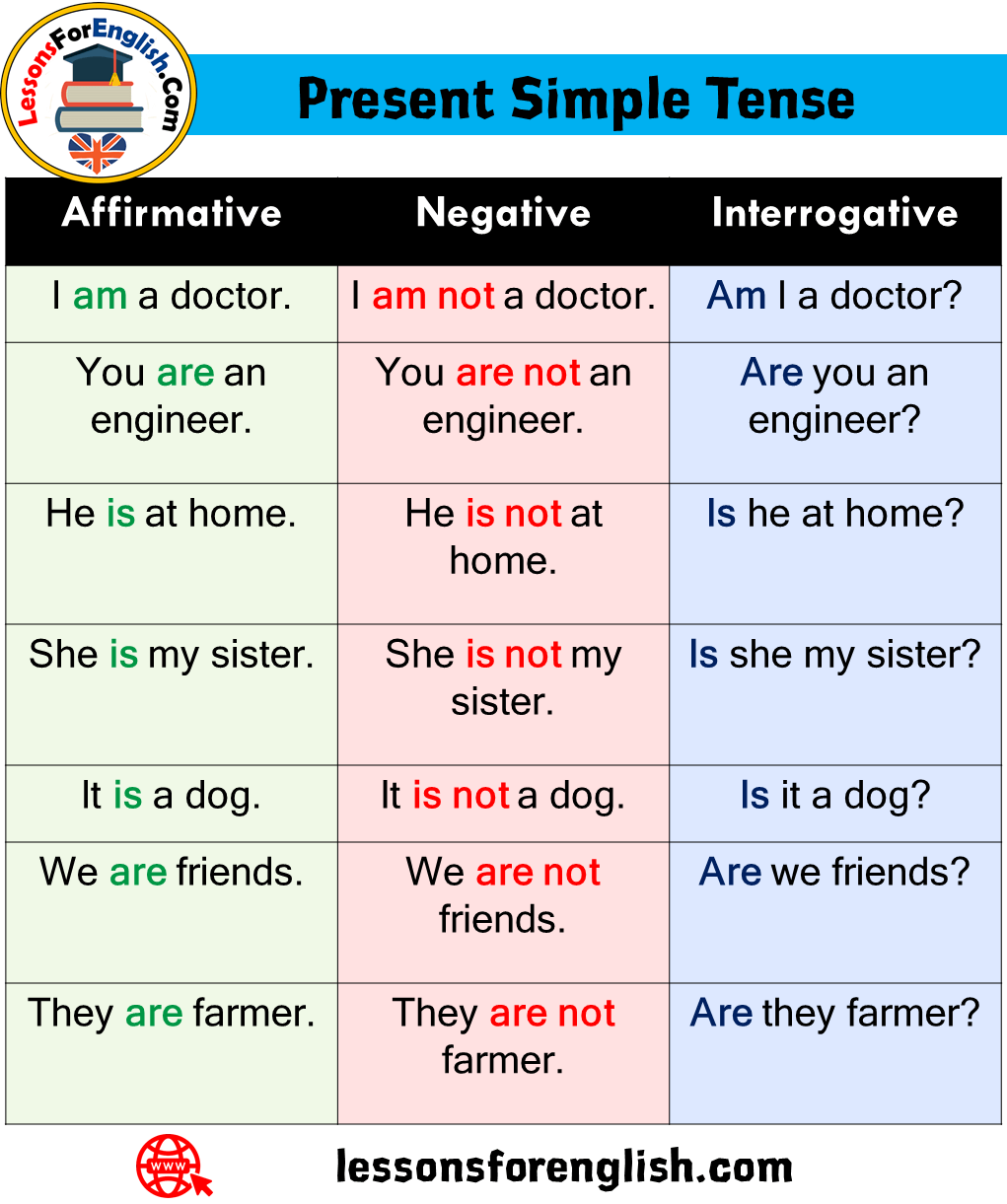
Simple Present Tenses Definition and 20 Example Sentences Lessons For English
The above examples of Simple Present Tense are here to help you understand and use this tense properly and naturally. You should also get familiar with its usage and rules - visit the Simple Present Tense page to help you with that. For exercises visit the Simple Present Exercises. Check out the other tenses:
10 Examples of Simple Present Tense Sentences English Study Here

Answers. He goes to the gym every day. (go) When do you go to college? (does) She thinks she is very beautiful. (think) Does he live in America? (lives) I write a letter to my mom every month. (wrote) Examples of Simple Present Tense 1) Merry and I go to the mall every Saturday 2) A Camel carries travelers through the ocean.
100 Simple Present Tense Examples Simple Present Tense Sentences Examples EnglishTeachoo

Simple Present Tense Examples Used to Denote Habitual Actions. One of the instances simple present tense is used in sentences is to speak about habitual actions or habits of anyone. Raj eats bread and butter before going to school. Emma watches cartoons every day. Izzy drinks milk every night before going to bed.
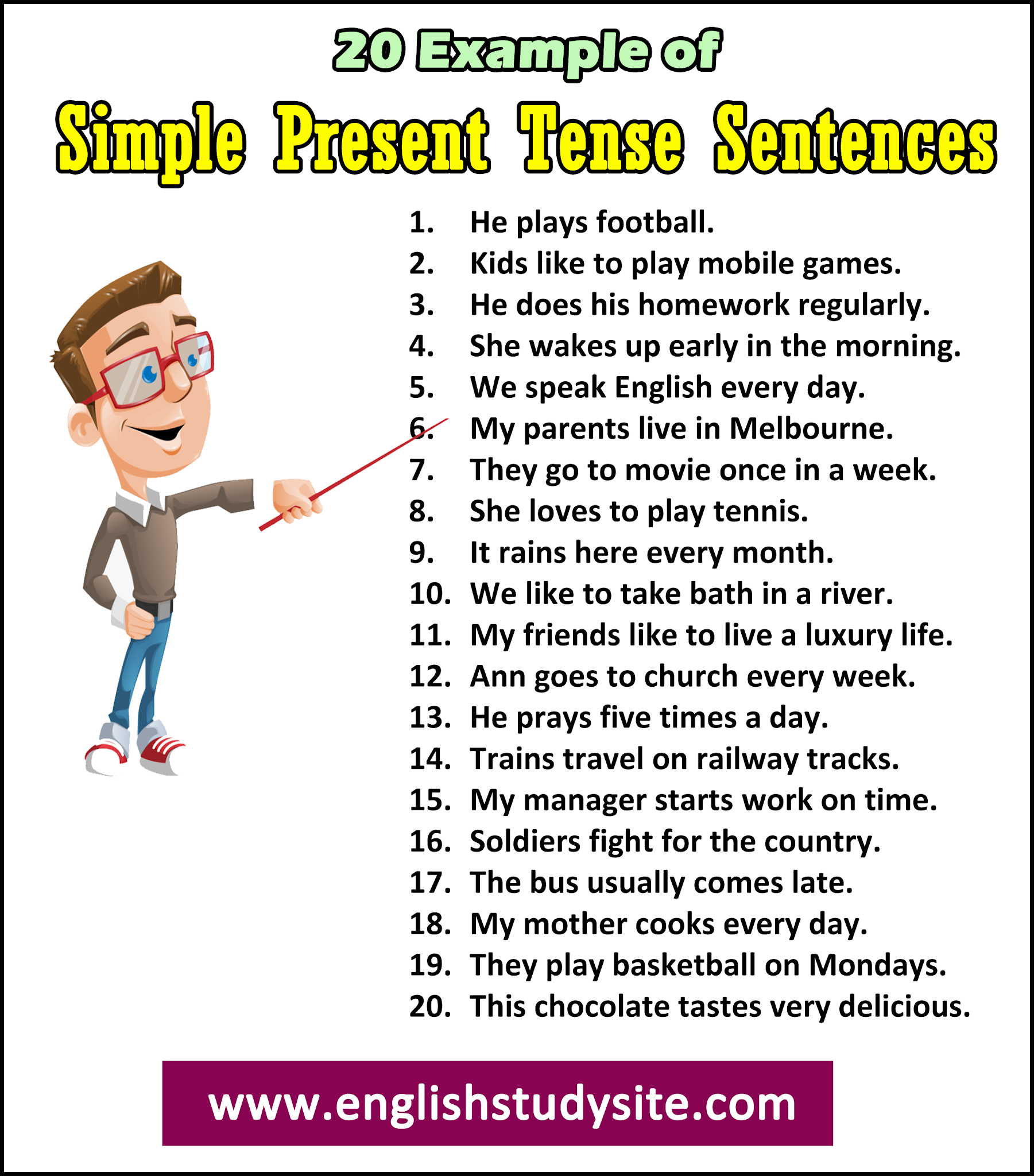
20 Example Sentences of Simple Present Tense
Simple present tense also called present indefinite tense, is used to express general statements and describe usual or habitual actions. In simple words, we can say that the simple present tense is used to describe routine acts. Formula. Its formula is very simple as only base form of verb is used.
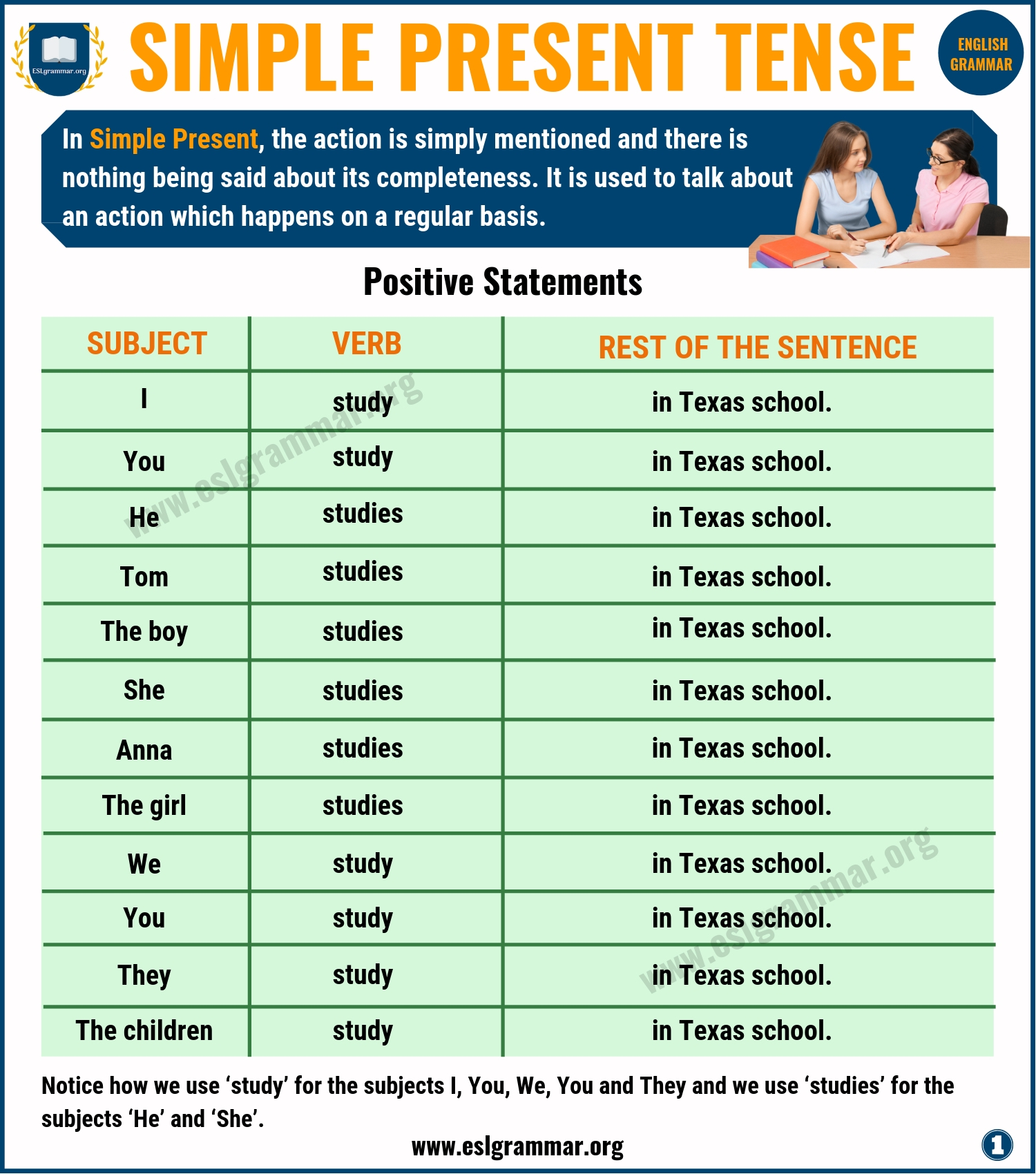
Simple Present Tense Definition and Useful Examples ESL Grammar
Most verbs in the simple present tense use the infinitive form (e.g., "run"). The only exception is the third person singular (used with "he," "she," "it," and any singular noun), which is usually formed by adding "s" to the end of the verb. Examples: Simple present tense in sentences Jan and Alana exercise. every morning.
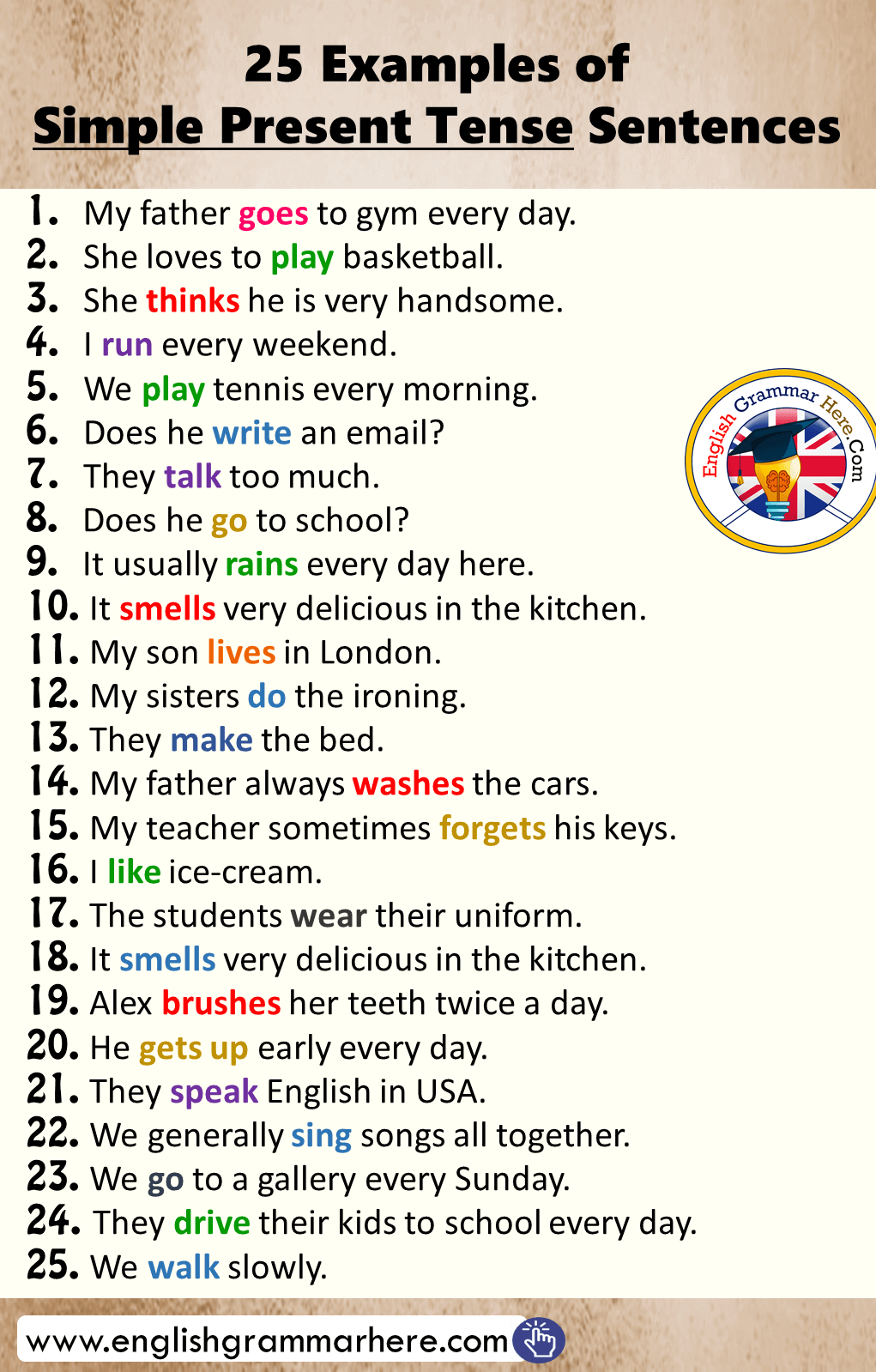
25 Examples of Simple Present Tense Sentences English Grammar Here
The simple present is a verb tense with two main uses. We use the simple present tense when an action is happening right now, or when it happens regularly (or unceasingly, which is why it's sometimes called present indefinite). Depending on the person, the simple present tense is formed by using the root form or by adding s or es to the end.
Simple Present Tense Definition and Useful Examples ESL Grammar
Simple Present Tense Sentences (50 examples): The simple present tense is one of the most commonly used in English grammar tenses. It is used to express an action that is routine, repeated, or may state some facts.
Contoh Simple Present Tense Examples Sentences With Adjectives IMAGESEE

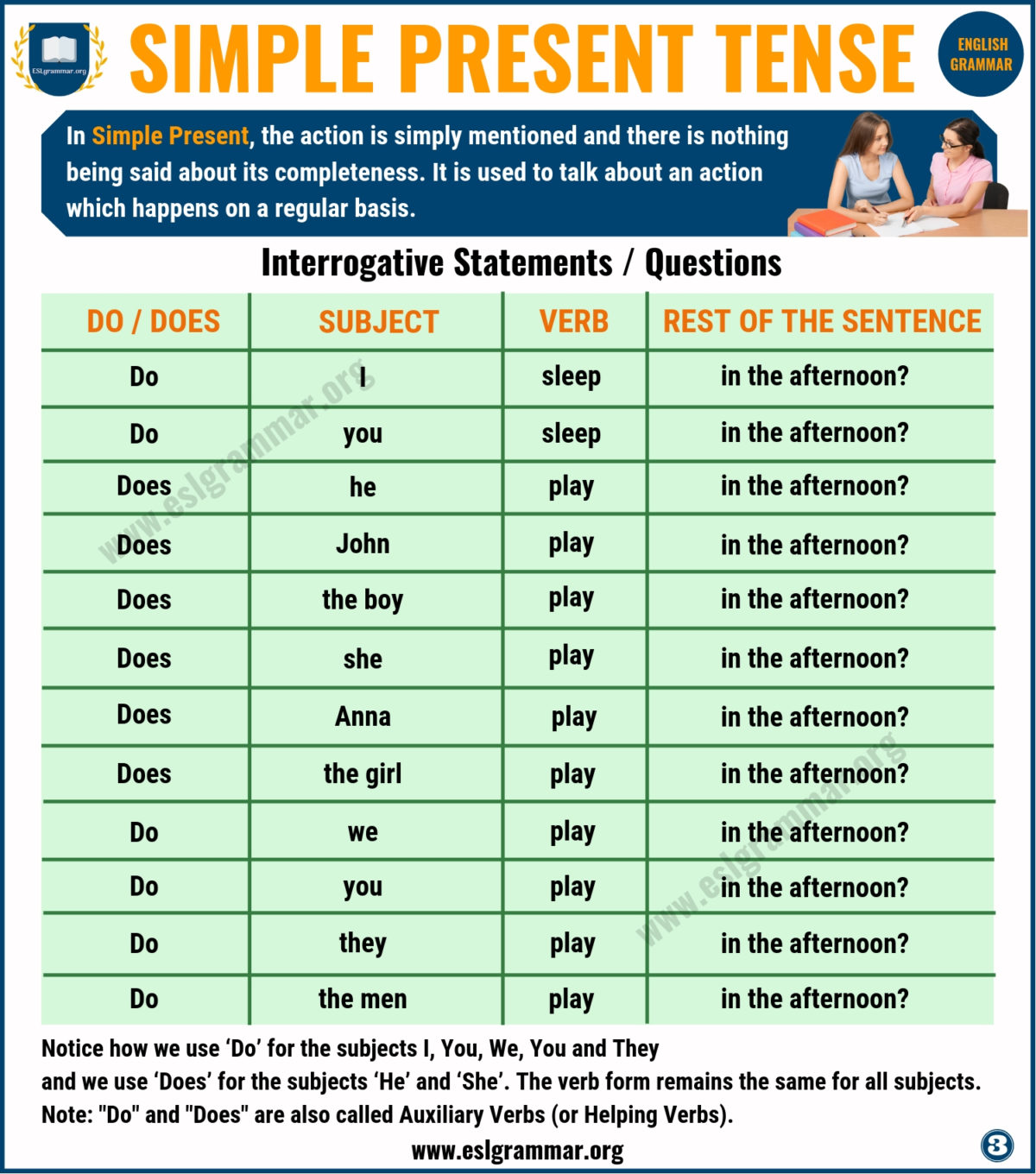
Simple present tense (present simple tense) is a verb tense that describes the events and situations that do not change over time. We use simple present tense for the actions that happen regualarly, and that is why we use some frequency adverbs to express these repititive actions. " Do " and " does " are the auxiliary verbs of present.
100 Sentences of Simple Present Tense English Study Here

Here are 50 Sentences of Simple Present Tense: I eat breakfast every morning. She works as a teacher. They live in a big house. He plays soccer with his friends. We go to the gym on weekends. The sun rises in the east. Cats like to play with toys. The earth revolves around the sun.
20 Sentences in Simple Present Tense English Study Here
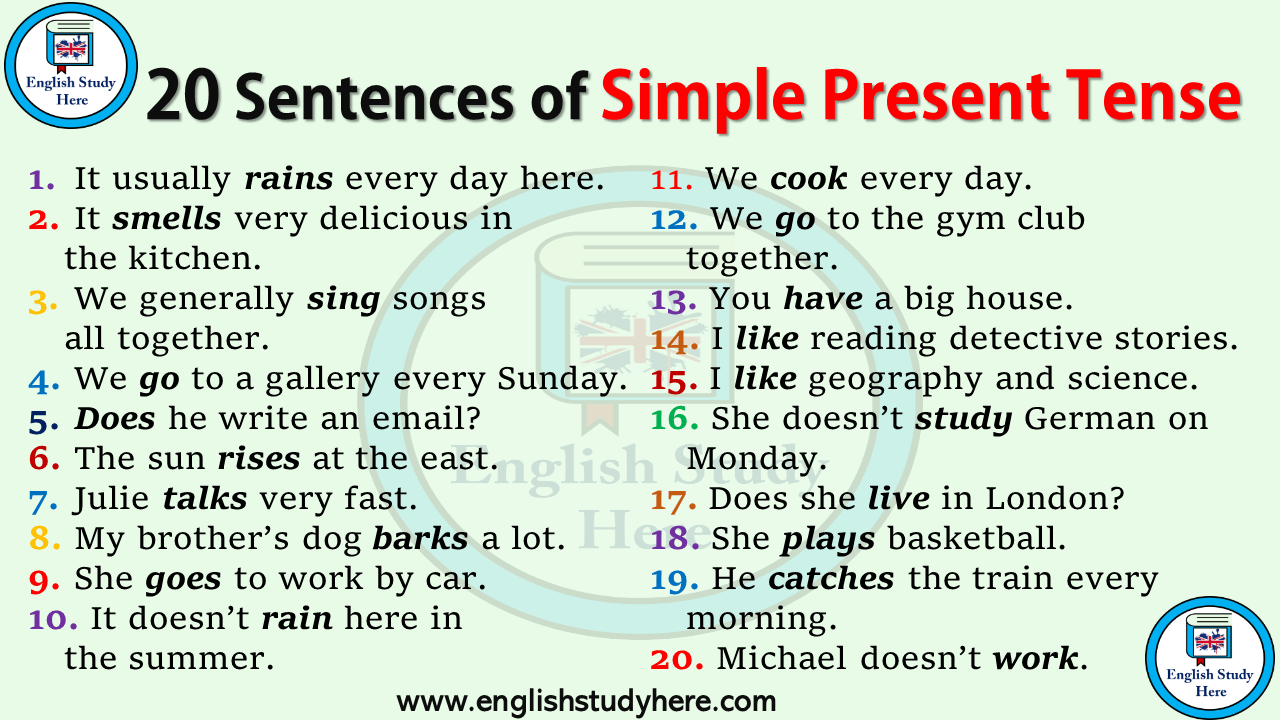
The simple present (also called present simple or present indefinite) is a verb tense which is used to show repetition, habit or generalization. Less commonly, the simple present can be used to talk about scheduled actions in the near future and, in some cases, actions happening now. Read on for detailed descriptions, examples, and simple.
10 Sentences of Simple Present Tense English Study Here

Exercise 1: Choose the Correct Form of the Verb. For each sentence, choose the correct form of the verb in simple present tense. She (walks/walk) to school every day. My brother (knows/know) how to play the piano. The Earth (revolves/revolve) around the Sun.
35 Sentences of Simple Present Tense in Grammar English Grammar Here
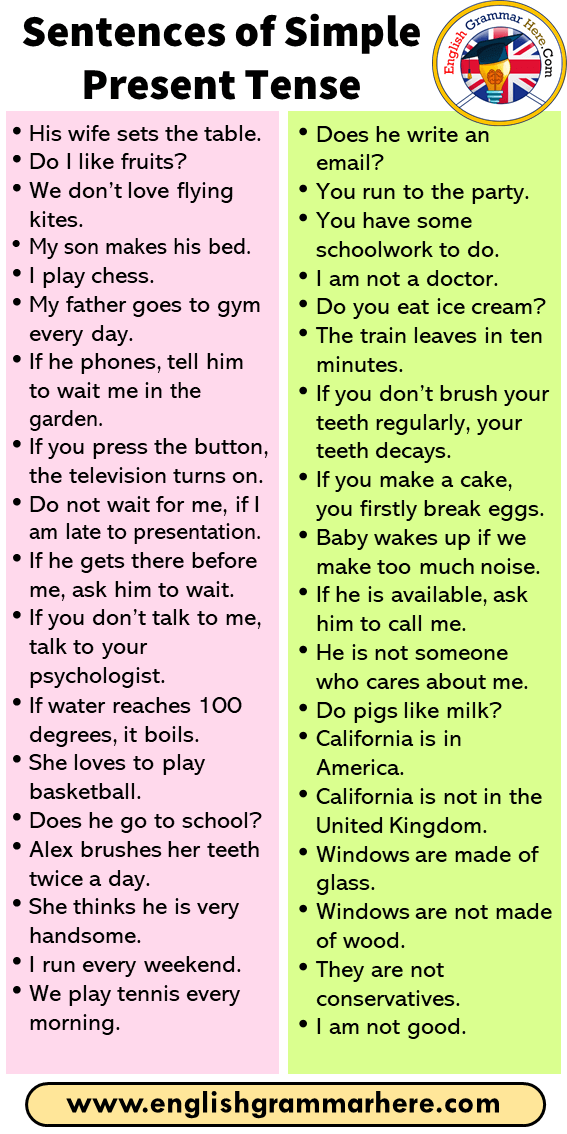
Here are some examples: I speak English. He likes painting. To construct negative sentences in the simple present tense, use the auxiliary verb "do" or "does" before the base form of the main verb. "Do" is used with plural subjects and "does" with singular subjects. Add the word "not" after the auxiliary verb to form the.